Need a German IP address to watch local TV, access German websites while traveling, or browse with a different IP? You have several options, including VPNs, proxy servers, and the Tor browser. Each comes with its own advantages and limitations.
A VPN is generally the easiest option. Simply connect to a server in Germany, and websites will see its IP address instead of yours. VPNs also encrypt your traffic, which protects your online activity from snooping.
Proxies can also give you a German IP, though they usually only cover your browser. Unencrypted proxies can also expose your data. Tor browser is another free option, though it can be painfully slow and you’ll have to tinker with its configuration file.
In this guide, I’ll walk you through each method, cover any drawbacks, and mention some VPNs that actually offer German servers—both free and premium, in case you want one that works for streaming.
How to get a German IP address with a VPN
The most convenient way to get a German IP address is to connect to a German VPN server. Here’s how:
- Sign up for a VPN that has servers in Germany. I prefer NordVPN, since it can unblock platforms like Joyn, RTL+, ProSieben, and many others from abroad. Surfshark is an excellent option if you want to connect unlimited devices simultaneously.
- Download the VPN, install it, and open it.
- Connect to a server located in Germany (e.g., Frankfurt, Berlin).
- Open a private/Incognito browser window (or clear your cookies) and visit the website you’re trying to access. Try switching servers if your current German IP is blocked.
Can I get a German IP address with a free VPN?
Yes, you can use a free VPN to obtain a German IP address, though they’re only useful for light browsing. Providers like Windscribe have free servers in Germany but a 10 GB data cap per month, while hide.me offers unlimited data but only one simultaneous connection.
Unfortunately, no providers allow torrenting on their free plans, and free servers usually get blocked by streaming sites. If you want to change your IP to a German one to stream local shows while traveling, then your best bet is a free trial VPN.
Other methods to get a German IP address
If you’d rather not use a VPN, your other options are to connect via proxy server or the Tor Browser. The former has some glaring security issues that I’ll get into below. The latter can be extremely slow, with the possibility of connection failures if there are no German exit nodes available.
Using a proxy
A German proxy server can give you a German IP address without installing a VPN. Your browser sends requests through the proxy, making websites see its IP address instead of your own. This can be useful for accessing German websites while abroad, although streaming services often detect and block proxy connections.
You’ll also need to be careful about which provider you choose. Some free proxies collect browsing data, show unwanted ads, or leave your traffic exposed if they don’t support HTTPS.
To connect through a German proxy:
- Find a proxy provider with servers in Germany.
- Copy the server’s IP address and port number.
- Open your browser’s or device’s network settings and locate the proxy configuration.
- Enter the server details and save your changes.
- Use an IP-checking tool to verify that you’re now using a German IP address.
Remember that browser proxies only affect traffic from the configured browser. In contrast, a VPN routes all your data through the VPN server and encrypts everything.
Using Tor browser
Tor browser is another option if you don’t mind slower browsing speeds. You can configure it to favor exit relays in Germany, making websites see a German IP address when you visit them through Tor.
You’ll need to edit Tor’s configuration file to do this:
- Download the Tor browser from The Tor Project’s website and install it.
- Locate its installation folder and navigate to Browser > TorBrowser > Data > Tor.
- Open the torrc file using a text editor.
- Add this at the end of the file: ExitNodes {de} StrictNodes 1.
- Save your changes and restart Tor browser.
- Visit any IP-checking site to confirm you’re connecting through an exit relay in Germany.

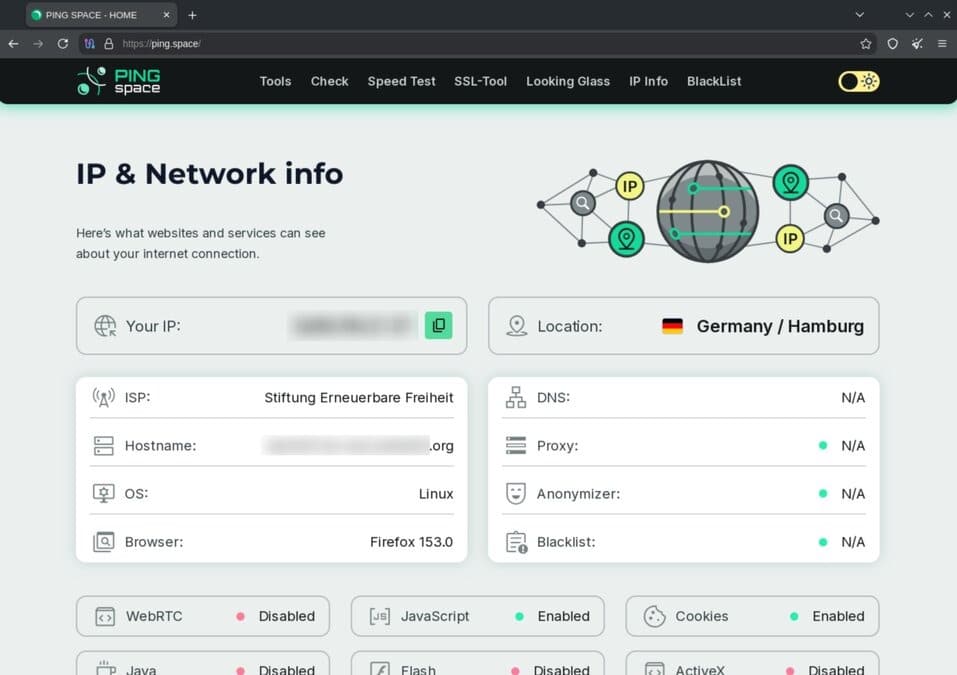
If Tor can’t find any available German exit relays, then you may be unable to connect. Even when it works, expect considerably slower speeds than with a VPN. Tor relies on volunteer-run relays. Large downloads and streaming HD video put unnecessary strain on the network, so stick to light browsing when possible.
Much like with proxies, only traffic routed through the Tor browser will use the German IP address; everything else on your system will continue using your regular connection. You may see additional CAPTCHAs or outright blocks from websites.
How to get a German IP address FAQs
Can I get a German IP address for free?
You can get a German IP address with a free VPN, proxy, or by forcing Tor browser to use German exit nodes. Each method has a few noticeable downsides like data caps for free VPNs, potential data logging and other privacy risks for proxies, and incredibly slow speeds on Tor (if a German exit node is even available in the first place).
Is it legal to get a German IP address with a VPN?
While VPNs are illegal in some areas (or at least heavily restricted), it's generally legal to get a German IP in most of the world. This also applies to proxies and Tor browser, though we always recommend checking local legislation before using any of these methods.