Your IP address can reveal your approximate location and help websites identify you. This opens you up to tracking by governments, advertisers, hackers, and other entities that don’t necessarily have your best interests at heart. Hiding your real IP address can offer a bit of privacy for everyday browsing, bypassing censorship, or accessing location-restricted services. And it doesn’t have to cost you anything.
Free VPNs are the simplest option for hiding your IP across your internet traffic. Tor provides stronger anonymity but only hides your browser’s IP address without some unwieldy configuration. Proxies are the least reliable of the bunch, and may be a security risk if you don’t know who runs them.
Below, I’ll cover how to use each of these three methods, along with their pros and cons. I’ll also explain why hiding your real IP address is useful if you’re new to all this.
How to hide your IP address for free
There are three free methods for hiding your IP address. Here they are, ranked by how much of your data they protect and how reliably they hide your IP.
1. Use a free VPN
Free VPNs can hide your IP well enough for light browsing, but they usually come with limits. Some block torrenting. Others cap your data, offer only a few servers, or slow your connection when those servers get crowded.
The advantage of using a VPN over something like Tor Browser or a proxy is that a VPN covers all your network traffic without extra configuration. If you’re looking for basic privacy without paying for a subscription, here’s what you need to do:
-
- Sign up for a free VPN account. I recommend Proton VPN if you don’t want to deal with data caps but don’t mind not being able to choose your server. Windscribe is another good option with 10 free locations, but a 10 GB monthly data limit.
- Install the VPN app on the devices you want to hide your IP on.
- Open the VPN and connect to a server, preferably one that’s close by to avoid slowdowns.
- If the service you’re trying to access doesn’t work, try clearing your browser cookies or using a private window/Incognito mode.
You do need to be careful which free VPN you opt for. There are plenty of them on the market, but many fail to meet basic encryption and security standards, while others track and store your data to monetize. The best option is to choose a reputable VPN provider that offers a free tier, such as those mentioned above. Alternatively, if you only need to hide your IP for a short while (say, an upcoming trip), but aren’t a fan of free VPN limits, then consider a free trial VPN instead.
2. Use the Tor network
Tor routes your browser traffic through several volunteer-run servers before it reaches the site you’re visiting, so the site sees a Tor exit node’s IP instead of yours. The easiest way to use it is through the Tor Browser, which handles the setup for you. Just download and use it as you would any other browser.
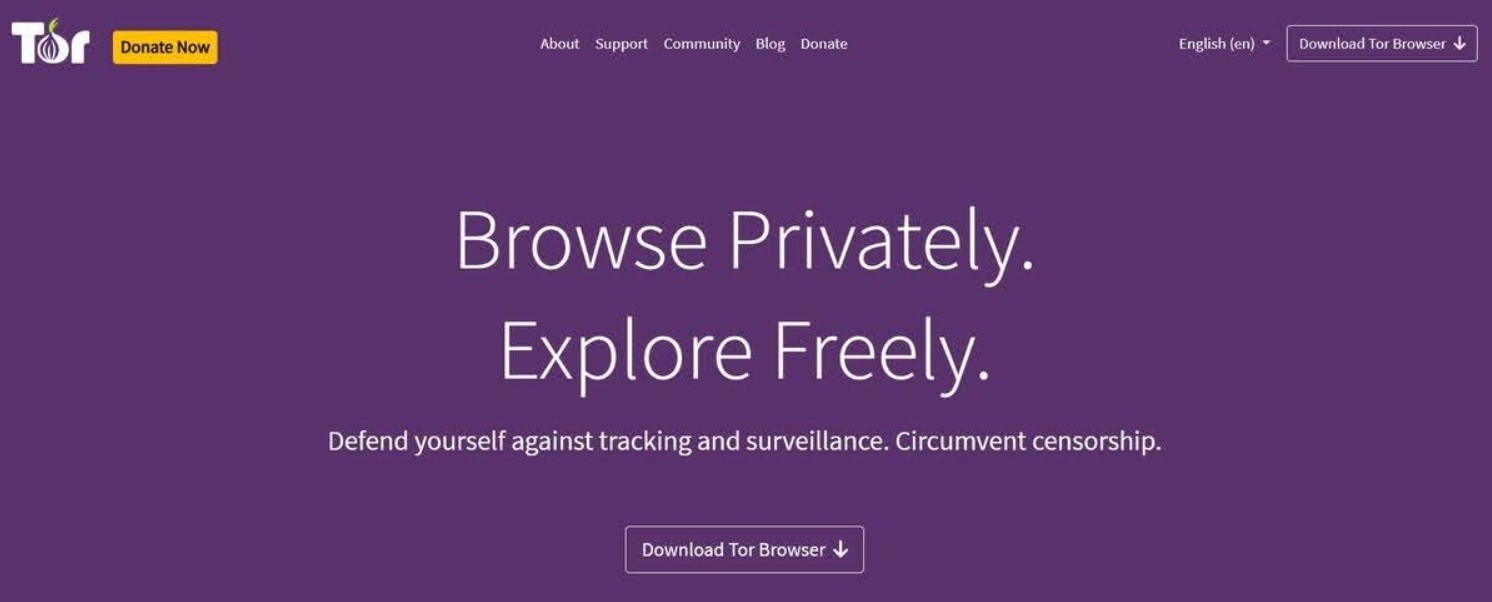
Tor can route traffic from other applications with extra configuration, but Tor Browser only protects traffic inside the browser. Tor also tends to be slower, and some sites block Tor connections. You will likely encounter more CAPTCHA challenges, which can make everyday browsing more annoying.
Another option is to combine Tor with a VPN for added protection.
3. Try a free proxy service
Free proxies can hide your IP without much setup, but they come with more problems than free VPNs and Tor. Many have slow or unreliable connections, and you never know who runs the proxy or what they do with the traffic passing through it.
Moreover, the proxy host can still see your IP, the sites you connect to, and other connection details. Free VPNs also have this issue, though good ones have no-logs policies and undergo security audits to offer users peace of mind.
Free proxies can also manipulate your traffic by redirecting you to malicious or phishing sites or injecting unwanted ads. Once again, VPNs can also have this problem, though reputable providers have security measures in place to protect against this type of abuse.
If you do use a proxy server to hide your IP, always go with an HTTPS or other encrypted option, as an unencrypted HTTP connection between you and the proxy can expose your traffic to anyone monitoring that connection. For torrenting, a no-logs SOCKS5 proxy is a good choice, though most free proxies don’t meet the no-logs requirement.
The exact steps vary between devices and browsers, but the basic process is the same:
- Find a reputable HTTPS proxy server and copy its proxy address and port.
- Open your device or browser’s network/proxy settings.
- Enter the proxy address and port, then save the settings
- Visit an IP-checking site to confirm that your IP has changed.
Keep in mind that HTTP and HTTPS proxies generally don’t route DNS requests through the proxy, which can expose your real IP address and location. SOCKS5 proxies can route DNS requests through the proxy, depending on how they’re configured. Reputable VPNs generally route DNS requests through the VPN connection as well.
How can I check if my IP address is hidden?
You can check if your IP address is hidden through an IP address checking tool. Follow the link and check what your current IP is. Then, once you connect to your VPN or proxy, or start up the Tor Browser, head over to the tool again and make sure your real IP address doesn’t appear anywhere on the page.
Why should I hide my IP address?
Hiding your IP address can help in several situations. Here are some common reasons people choose to mask their public IP address:
- To bypass geo-restrictions: Access websites and other content that’s only available for users in certain countries or regions. Keep in mind that free options rarely work for streaming libraries (if ever).
- For private torrenting: Hide your public IP from other peers in a torrent swarm (including so-called “copyright trolls“), making it harder for them to trace your downloads back to your home connection.
- To evade censorship: Countries with heavy internet restrictions like China and Russia block certain websites and services and monitor what you do online. A VPN or Tor (outside China) can help you access the internet more freely and encrypt your data so your ISP can’t tell what services you access.
- To avoid tracking: Stop websites, your internet service provider, and other third parties from using your IP address to monitor your location, identify your device, and track your browsing habits. Note that your browser and device can still reveal location data in other ways, such as with browser cookies or location services.
How to hide your IP address: FAQs
What does your IP reveal about you?
Your IP address can identify your device or wi-fi router and reveal your general location, internet provider, and network details. Websites and other online services can use your IP to estimate your city or region. They can remember your IP address to identify you on future visits. An IP address usually can't reveal your exact home address or human identity by itself, but your ISP can associate it with your account.
How do I hide my IP address on my phone for free?
To hide your IP address on your phone for free, use a reputable free VPN app or connect through the Tor network (on Android, at least). A VPN routes your data through a server. Tor sends it through several relays. Check the app's privacy policy before connecting safely on public or mobile networks.
Is a free VPN enough to hide your IP for torrenting?
A free VPN may hide your IP for torrenting, but most providers either block P2P traffic on their free plans or cap your monthly data and/or speeds to the point where torrenting becomes impractical.
Is hiding your IP address illegal?
Hiding your IP address is generally legal in most countries, though some areas ban or restrict VPN usage, so you'll have to check local legislation to make sure. Although hiding your IP is usually legal, that doesn't make other activities legal, like torrenting copyrighted material with a VPN.
Does Incognito mode hide my IP?
No, Incognito mode and other private browsing modes built into web browsers don't hide your IP address. They mainly prevent your browser from saving your local history, cookies, and form data after you close your browser. Websites, your ISP, and network admins can still see your IP while you browse in a private window.
Contents [hide]
- How to hide your IP address for free
- Why should I hide my IP address?
- How to hide your IP address: FAQs
- What does your IP reveal about you?
- How do I hide my IP address on my phone for free?
- Is a free VPN enough to hide your IP for torrenting?
- Is hiding your IP address illegal?
- Does Incognito mode hide my IP?