
I recently traveled through mainland China on a once-in-a-lifetime trip, visiting Beijing’s Forbidden City, the Great Wall of China, and the Terracotta Warriors in Xi’an. As a VPN expert, I arrived prepared, with 15 VPNs installed on my devices, ready to test for this guide as I went.
Some of my findings surprised me. China’s Great Firewall (GFW) is aggressive, unpredictable, and much harder to bypass than regular streaming blocks. Some VPNs connected smoothly from my hotel rooms. Others struggled, dropped repeatedly, or failed when I tried to access blocked Western sites.
I found some VPN websites harder to access across different Chinese regions, suggesting that local ISP-level blocks may affect availability. This can make it harder for Chinese netizens to purchase a VPN subscription, which is why I’ve included information about VPN mirror links.
In this up-to-date guide to the Best VPN for China 2026, I explain what worked, what failed, and which VPNs I’d stick with if I ever return to China. Keep reading to see the results of my VPN speed tests and how each service performed when accessing YouTube, Facebook, Gmail, WhatsApp, Netflix, restricted news sites, and other web services blocked behind the Great Firewall.
What are the best VPNs for China?
China has become easier to visit, but the internet still faces major restrictions. The Great Firewall of China is enforced nationwide, with internet service providers required to block Western apps, news sites, streaming platforms, social networks, and more. This means you must choose your VPN carefully and, preferably, set it up before you arrive.
Below, I have included the six China VPNs I’d trust most in 2026, based on my tests, reliability, privacy features, and ability to access blocked services while on the ground.
- ExpressVPN: Best overall VPN for China: This was the best all-rounder in my tests. ExpressVPN has remained a popular VPN in China since I first started testing VPNs back in 2014, and it still offers the smoothest experience for most people. Its automatic obfuscation worked without needing a special stealth mode, and I could access Facebook, YouTube, X, British TV streams, and other blocked services while travelling through China. It even offers a mirror link, allowing users to subscribe if the main website is blocked.
- Surfshark: Best cheap VPN for China: Surfshark is one of my go-to VPNs while living in countries like the UK and Canada. I was happy to find that it also worked reliably in China. Its NoBorders mode helps on restrictive networks, and nearby servers in Japan and Singapore gave me the best results. The VPN connected quickly, had usable speeds, and worked to access services back home. It also allows unlimited connections, making it great for families or groups travelling through the country.
- Hotspot Shield: Its Hydra protocol includes reliable obfuscation that helped me connect and bypass blocks imposed by the government and Chinese ISPs. Speeds were impressive, and it accessed most of the streaming services I tested on public transport and while staying in hotels.
- VyprVPN: Decent speeds and unblocking thanks to its Chameleon protocol. Worked to stream services like Netflix, Crave, and BBC iPlayer while travelling through China. Speeds were among the best I experienced, and the website maintains mirrors to help Chinese citizens subscribe. However, I had to stick to Chameleon at all times because other protocols were blocked.
- PrivateVPN: Not the fastest, but it is highly secure and offers decent obfuscation. Its apps worked to bypass blocks on all my devices. However, while I could read news and access streaming sites reliably, speeds were slower, leading to some buffering. It also includes a SOCKS5 proxy, which can help to connect in some cases.
- NordVPN: Too fiddly to recommend for China. Windows failed in my tests, and Android only worked through a manual strongSwan setup. That workaround was limited to UK, US, and Japan servers. It worked for my needs, but I would give NordVPN a miss if you need more country options or a VPN that works out of the box.
Criteria for choosing VPNs in China
Finding a VPN that works reliably in China is not easy. Many of the VPNs I tested failed to connect altogether, especially when using standard protocols. The VPNs I recommend below came out on top in 2026. They connected more consistently across different locations, required less troubleshooting, and caused fewer issues when accessing blocked sites and services.
I chose the best VPNs for China using the following criteria:
- Worked in China with minimal troubleshooting
- Provided fast, usable speeds
- Had servers nearby in Asia, plus a wider global network
- Protected privacy with a no-logs policy
- Included strong security and leak protection
- Offered useful customer support when connections failed or needed tweaking
For more details about how I tested and chose VPNs, refer to the testing methodology later in this guide.
Best VPNs for China
Here are the VPNs that worked best in my China tests:
1. ExpressVPN

ExpressVPN offers a highly reliable way to protect your privacy and bypass censorship in China. I did not have to contact support, install a third-party app, or use a curated list of China-compatible servers. Instead, I installed the app before travelling, opened it when I arrived in China, and connected as normal.
ExpressVPN worked without manual setup in China
ExpressVPN also maintains a mirror site, which allows users in China to subscribe even if local ISPs block access to the main website. You can get this address and make a note of it before travelling to China, so you have it on hand if necessary.
The only specific setup required in China is to set ExpressVPN to either Automatic or OpenVPN. ExpressVPN’s obfuscation is built into its OpenVPN connection. This removes the need to enable a separate stealth mode, which makes it easy for beginners. It also means you can connect to any of its 100+ server locations.
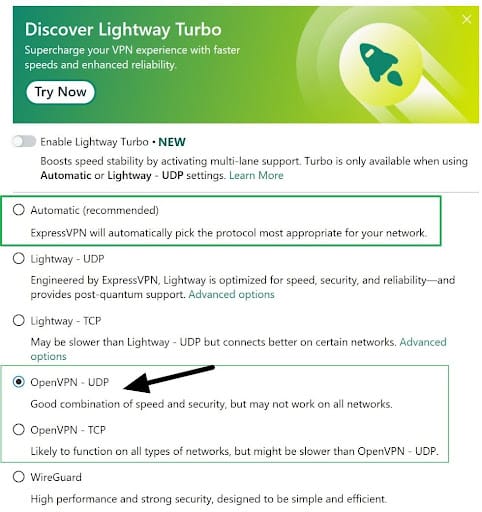
I tested ExpressVPN across Beijing, Xi’an, and Shanghai
I used ExpressVPN to watch British TV streams in public places like train stations, coffee shops, and convenience stores. I was also able to log in to Netflix, Gmail, YouTube, X, and Facebook while staying in hotels in Beijing, Xi’an, and Shanghai. This was the case on both the Windows and Android apps, which both worked well. I only suffered a few intermittent outages along the way, but on most of the wifi hotspots I encountered, it worked a charm.
Which ExpressVPN servers worked best in China?
Just bear in mind that you may need to test a few server locations based on what you are trying to achieve. Nearby servers in Japan, Singapore, and Hong Kong are good starting points for faster speeds. For US streaming, I contacted live chat, and the agent recommended LA5. I connected to that server and was able to stream Netflix and Hulu, which was great news in my downtime.

ExpressVPN averaged 35 Mbps using obfuscated OpenVPN
A big selling point for ExpressVPN is its Lightway protocol and the newer Lightway Turbo feature, which are designed to give users the fastest VPN speeds possible. However, although these protocols are useful elsewhere, you will need to stick to obfuscated OpenVPN in China. The good news is that OpenVPN still averaged around 35 Mbps in my tests, which was fast enough for HD streaming, video calls, browsing, and social media.
ExpressVPN is more expensive than Surfshark, and some people may feel that the difference between the two is not big enough to justify the price. However, if you don’t mind paying extra for ease of use, ExpressVPN remains the best VPN for China in 2026.
Pros
- Most reliable VPN for China
- Accesses geo-restricted sites like Netflix
- Extremely fast speeds
- Lots of server locations
- Ideal for unblocking YouTube in China
Cons
- The price is a bit higher than my other picks
EASIEST VPN FOR CHINA:ExpressVPN applies obfuscation automatically over OpenVPN and worked reliably across the networks I tested. It is expensive, but it offers the smoothest setup and a 30-day money-back guarantee.
2. Surfshark
Surfshark is my top budget pick for China. The VPN is well known for fast speeds and reliable streaming access, and I was pleased to find that it continued to work even after I arrived in China.
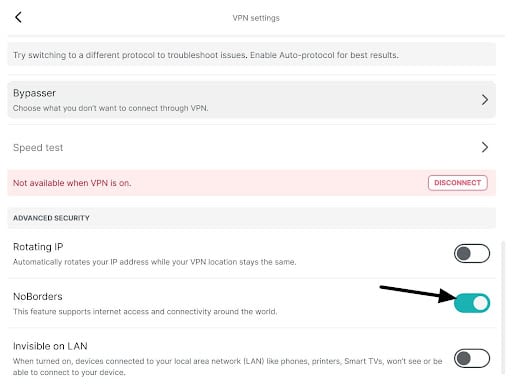
NoBorders mode helped Surfshark work in China
The main feature that makes Surfshark useful in China is its NoBorders mode. This is designed for restrictive networks, and it helps the app surface servers that are more likely to work behind censorship. I confirmed it was enabled in the app and then tested servers across its network.
Surfshark accessed Gmail, Netflix, and BBC iPlayer
Experience-wise, Surfshark connected quickly. It delivered reliable speeds and worked for the services I needed back home, including Facebook, work logins, Gmail, Netflix, and BBC iPlayer. I did have the odd problem connecting, but when I tested another server, it usually connected within a few tries.
You also get rotating IP and Invisible on LAN features, which can help hide your device on local networks. This gives you a little extra privacy when using shared Wi-Fi or performing sensitive tasks in China.
The other big advantage is price. Surfshark starts at just $2.40 per month for everything you need to bypass blocks in China. And it supports unlimited device connections, making it a great option for families, couples, or groups visiting China who want to share a VPN on their travels.
As with my other recommendations, I advise installing Surfshark before you arrive in China. The website can be blocked by some Chinese ISPs. If you are already behind the Great Firewall, you can contact live chat support for help if needed.
Overall, Surfshark is a strong choice if you want a cheaper VPN that still works in China. ExpressVPN was smoother in my tests, but Surfshark is better value if you are happy using NoBorders mode and sticking to the servers that work best.
Surfshark no longer supports Shadowsocks
The main caveat is that Surfshark no longer supports Shadowsocks. If you specifically want a VPN with a Shadowsocks or SOCKS5 proxy, you will need to consider another provider.
Pros
- Great at unblocking
- Unlimited devices
- Lots of security extras
- 24/7 live chat support
Cons
- Customer support isn’t always reliable
BEST BUDGET CHINA VPN:Surfshark is a solid all-rounder that lets you protect as many devices as you like. It offers a 30-day money-back guarantee on all plans.
3. Hotspot Shield
Hotspot Shield is another strong option for China, especially if you want fast speeds without fiddling with settings. The main reason it works is Hydra, Hotspot Shield’s proprietary VPN protocol. When you use Hydra, obfuscation happens invisibly in the background, so there is no separate stealth mode to enable.
Hotspot Shield averaged 37 Mbps in China
In my tests, this made Hotspot Shield easy to use on restrictive networks. I connected, left Hydra enabled, and bypassed blocks imposed by Chinese ISPs and the Great Firewall. Speeds were also impressive. I had an average download speed of 37 Mbps, which meant I could stream and do other data-intensive tasks like making video calls and using social media on my trip.
Is Hotspot Shield’s proprietary protocol trustworthy?
Some privacy purists may dislike that Hydra is proprietary and closed-source. That is a fair concern if you prefer to use protocols that anybody can audit. However, in places like China, there is an advantage to Hotspot Shield keeping the details of Hydra’s obfuscation close to its chest. The fact that it continues to work on the ground in China shows that this approach is helping it stay ahead of detection. The protocol has also been independently audited, meaning there is published evidence of its efficacy.
Hotspot Shield has apps for all major platforms
Hotspot Shield also has apps for Windows, macOS, Android, iOS, and Linux, plus automatic wifi protection for public networks. It is generally easy to use and set up, making it a decent option for beginners traveling to China who want something simple, quick, and effective.
Pros
- Fast speeds in China
- Automatic obfuscation with Hydra
- Easy to use
- Apps for all major platforms
- Automatic wifi protection
- 24/7 live chat support
Cons
- Hydra is proprietary and closed-source
- Fewer advanced settings than some rivals
FAST AND EASY CHINA VPN:Hotspot Shield uses its proprietary Hydra protocol to obfuscate traffic automatically, making it simple to use in China. It also delivers strong speeds and comes with a 45-day money-back guarantee.
4. VyprVPN
VyprVPN is a strong option for China, mainly because of its proprietary Chameleon protocol. I enabled Chameleon in the app, connected as usual, and bypassed blocks without needing any extra setup steps.
Chameleon bypassed Chinese VPN blocks in my tests
Chameleon disguises OpenVPN traffic to make VPN use harder to detect, and I found it highly effective for accessing servers in the West and continuing to use my accounts back home. Just bear in mind that while it worked to watch Netflix, Hulu, HBO Max, BBC iPlayer, and Prime Video, it often failed with platforms in other countries. It did not work with France.tv, Globo Play in Brazil, or Ten Play in Australia. This means you may want to test it with your specific streaming accounts using the money-back guarantee.
VyprVPN delivered strong UK and US speeds
VyprVPN is also great for performance. I used various servers in the UK and USA and always got good speeds for streaming, making video calls, and using services like YouTube. It also owns and operates its server network rather than relying entirely on third parties, which gives it greater control over its infrastructure and user privacy.
VyprVPN only allows five simultaneous connections
The apps are easy to use on Windows, macOS, Android, iOS, and Linux. However, you only get five simultaneous connections, which makes it less suitable for larger families who all want to use the VPN.
Pros
- Chameleon protocol works well against VPN blocks
- Consistently fast speeds
- Owns and operates its server network
- Simple apps for beginners
- 30-day money-back guarantee
Cons
- Only supports a limited number of simultaneous connections
- Not as reliable for streaming services outside major markets
GREAT SPEEDS:VyprVPN combines strong speeds with its Chameleon protocol, making it a dependable choice for bypassing censorship. Its apps are easy to use, but the low connection limit makes it less suitable for larger groups who all want to use a VPN while travelling in China.
5. PrivateVPN

PrivateVPN is a good option for China if you want something affordable, secure, and easy to use. Its network is smaller than the VPNs I recommended above. However, it still has 200 self-owned servers in 63+ countries, which is more than enough choice for the average user, including myself.
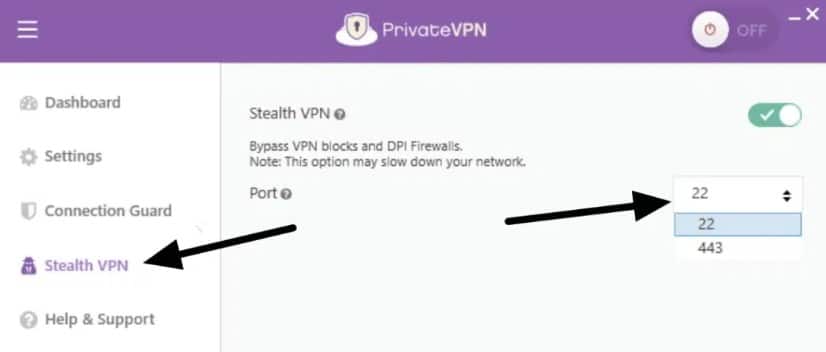
How I enabled PrivateVPN’s Stealth VPN mode
To use PrivateVPN in China, I first had to open Advanced View and enable Stealth VPN. You can also choose to route the obfuscation protocol over port 443 or port 22, both of which can help you connect on networks that block ports associated with VPNs, such as port 1194, which OpenVPN commonly uses by default.
PrivateVPN worked in hotels, restaurants, and on trains
Once I switched the VPN over, I found it reliable in coffee shops, restaurants, on trains, and in hotels in places like Beijing and Shanghai. This made it useful for bypassing censorship and watching BBC iPlayer and Netflix.
That said, this VPN is not as fast as my top picks. It averaged 23.5 Mbps across the Asian locations tested. The Hong Kong server averaged around 10 Mbps, while Malaysia was faster, delivering around 37 Mbps. The US and UK servers gave me speeds closer to 50 Mbps. Depending on what you want to do, you may need to test a few server locations. The good news? Its slower speeds didn’t stop me from streaming, though I did occasionally experience a few seconds of buffering.
PrivateVPN has custom apps for Windows, macOS, iOS, and Android, with manual setup available for Linux and routers. You can connect up to 10 devices at once, which is decent considering the subscription price.
PrivateVPN is one of the cheapest VPNs for China
The biggest selling point? PrivateVPN starts at around $2 per month, which makes it one of the cheapest VPNs in this guide. You also get a 30-day money-back guarantee, which means you can test it and compare it with any other VPN that interests you for bypassing Chinese internet restrictions.
Pros
- StealthVPN protocol works against censorship
- Strong privacy and no-logs policy
- Good for streaming
- Supports up to 10 devices
- Affordable plans
- 30-day money-back guarantee
Cons
- Slow average speeds in Asia
- Small server network
- No servers in South Korea, Singapore, or Taiwan
- WireGuard not available in the apps yet
AFFORDABLE STEALTH VPN:PrivateVPN gives you strong privacy, reliable unblocking, and a useful Stealth VPN mode for China. Speeds vary between servers, but it is still a solid low-cost option.
6. NordVPN

NordVPN was the first VPN I tested in China because it is usually my main workhorse. On paper, it looks ideal for China: it has obfuscated servers, strong privacy features, and reliable apps in most countries. In practice, it struggled more than I hoped.
NordVPN’s Windows app failed in my China tests
I could not get the Windows app working, and I also failed to connect to its obfuscated servers using Nord’s OpenVPN config files and the third-party OpenVPN Connect app.
Android worked, but only after jumping through hoops. The Android app failed in my first hotel in Beijing, so I contacted support. The agent told me that the Android app may work in some areas, but advised me to install the third-party strongSwan VPN Client and set up NordVPN manually using IKEv2/IPsec.
I went ahead and did this, but I had to use another VPN simply to unlock Google Play and download the recommended app. So if you are a Nord subscriber who will be visiting China, I strongly recommend setting this all up before you travel.
The workaround only offered UK, US, and Japan servers
The good news is that this solution worked. The catch is that it only worked with a specially curated list of China-friendly server addresses from NordVPN support. This list limits users to the UK, the US, and Japan only.

Because of this limitation, I would give NordVPN a miss in 2026 if you need streaming services or websites from other countries. This is frustrating because NordVPN has obfuscated servers in 16 countries, and its apps usually make obfuscation easy by switching automatically to OpenVPN TCP when needed:

It is worth noting that Nord’s long list of obfuscated servers may still work well in other restrictive countries. My complaints relate to China only.
I should also balance my complaints with an honest appraisal of the connection I got through the strongSwan app: the US and UK servers worked to access British TV streams, Gmail, YouTube, and Facebook across multiple hotels, public transport, and convenience store wifi, so the solution was suitable for what I wanted to do throughout my China trip.
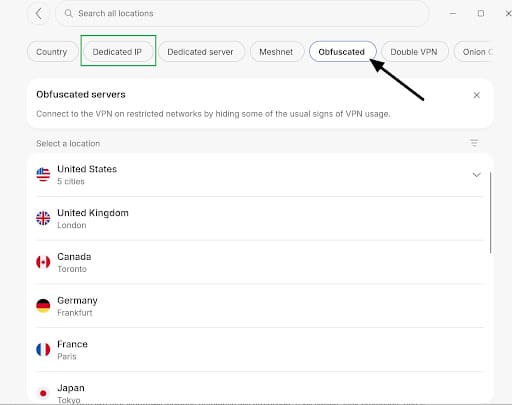
NordVPN has strong privacy features, including automatic wifi protection, a kill switch, leak protection, strong encryption, and a strict no-logs policy. You can also pay for a dedicated IP (highlighted in green above). However, the agent told me:
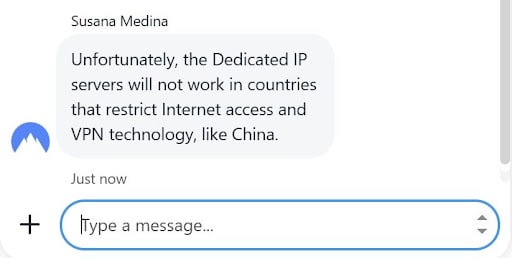
Most NordVPN app features were unavailable through strongSwan
Despite having custom apps stacked with all those impressive features, you will not be able to use any of those app features when connecting to Nord’s servers via the third-party strongSwan app. This means that the only way to get a kill switch is to enable Android’s native Always-on VPN feature. And no other advanced features will be available to you while in China, which is a major bummer.
The good news is that you still get 10 device connections and a 30-day money-back guarantee. So if you live in China and want to test NordVPN on your Android device with your specific ISP, you can do so risk-free.
NordVPN worked for my needs because I wanted to use UK and US services. If you need access to streaming platforms or websites from other countries, I’d give it a miss. Even if you do need a UK, US, or Japan IP, NordVPN is still too fiddly. Until Nord fixes its app issues in China, it will stay at the bottom of my recommendations.
Pros
- Worked for UK and US services on Android
- Strong privacy and no-logs policy
- Reliable speeds once connected
- Automatic wifi protection
- Supports up to 10 devices
- 30-day money-back guarantee
Cons
- Windows app failed in my tests
- Android requires the third-party strongSwan app
- Limited to UK, US, and Japan servers
- Advanced app features are unavailable in China
- More complicated to set up than my top picks
WORKS WITH EXTRA SETUP:NordVPN successfully accessed UK and US services through a manual strongSwan connection. The limited server choice and extra setup make it less convenient than my top recommendations.
Testing methodology: how I found the best VPNs for China
Many VPNs claim to work in China, but those claims do not always hold up once you are behind the Great Firewall. I tested each recommendation during my own trip through China to find the VPNs that worked reliably on the ground.
To make sure I could carry out the tests, I subscribed to each VPN and installed its apps before leaving for China. This is also what I recommend for travelers. VPN websites and app stores may be blocked after you arrive, making it harder to subscribe or download the software.
People already living in China may not have that option. For this reason, I also considered whether each provider offered a mirror site, downloadable installation files, or live chat support that users could reach from inside the country.
Here are the main factors I used to rank the best VPNs for China:
- Reliability behind the Great Firewall: I tested whether each VPN could establish and maintain a connection on restrictive Chinese networks. A VPN that worked once but regularly failed to reconnect did not rank as highly as one that worked consistently.
- Obfuscation: Standard encryption protects your data, but it does not hide the fact that you are using a VPN. I tested each provider’s censorship-bypassing mode, including OpenVPN obfuscation, NoBorders, Hydra, Chameleon, and Stealth VPN.
- Real-world networks and locations: I used the VPNs in Beijing, Xi’an, and Shanghai. Tests took place in hotels and public places such as train stations, coffee shops, restaurants, convenience stores, and public transport. This helped me see how each VPN behaved when moving between unfamiliar wifi networks.
- Access to blocked services: I checked whether the VPNs could access services commonly blocked in China, including Gmail, YouTube, Facebook, X, and international news and streaming platforms. I also tested services such as Netflix, Hulu, BBC iPlayer, and Prime Video using servers outside China.
- Speed and stability: I measured download speeds on servers in Asia, Europe, the UK, and the US. I also considered buffering, connection failures, and how often I needed to test another server before getting connected.
- Server choice: Every VPN in this guide has servers outside mainland China. I gave higher scores to providers that let me choose from a wide range of countries instead of restricting users to a small list of China-compatible servers.
- Ease of setup: I compared how much work each VPN required. Providers ranked higher when obfuscation worked automatically or only required a simple protocol change. VPNs that required third-party apps, manual configuration files, or help from customer support lost points.
- Privacy and security: I checked for strong encryption, leak protection, a kill switch, and a clear no-logs policy. I also considered independent audits, RAM-only servers, and whether the provider controlled its own servers.
- Apps and device support: I carried out most of my testing on Windows and Android. I also considered support for macOS, iOS, Linux, routers, and the number of devices allowed under one subscription.
- Price and guarantees: The most expensive VPN is not automatically the best. I compared reliability and ease of use against the subscription price, connection allowance, and money-back guarantee.
Are VPNs legal in China?
VPN use in China sits in a legal gray area. The government acknowledges that many people use VPNs for legitimate security reasons, and it does not automatically treat every person who opens a VPN app as a criminal. However, it restricts access to VPNs by imposing licensing rules on providers.
Government-approved VPNs are legal, but they must comply with Chinese monitoring and data-access requirements. This makes them unsuitable for users seeking privacy from Chinese authorities.
Unregistered VPNs, like those listed in this guide, are technically against the rules. Chinese citizens have received warnings and fines for using them, but there are no widely documented cases of foreign tourists being prosecuted merely for using a VPN to access personal services such as Facebook or Gmail.
Can you be fined for using a VPN in China?
Yes. Individual users have received warnings and fines for using unauthorized VPNs. In 2023, a programmer in northern China received a small fine and had more than one million yuan in earnings confiscated after using a VPN to work for an overseas company. This is a reminder that risks can increase depending on your reason for using a VPN.
Selling or operating an unauthorized VPN service also carries far greater risks than simply using a VPN to regain access to blocked services.
Do these rules apply to foreign tourists?
Foreign tourists quietly using a VPN for Gmail, social media, streaming, or personal communication rarely appear to be targeted. However, that does not make unauthorized VPN use completely risk-free. US travel advice warns that VPN use in China is illegal for bypassing censorship and could lead to device confiscation, fines, or detention.
Despite this official warning, there is little evidence that tourists are being penalized for accessing services from home while visiting China. However, it is advisable never to use a VPN to conceal political campaigning, activism, or anything else likely to attract the attention of Chinese authorities while on the ground in the country.
Can I use a free VPN in China?
Anybody living in or visiting China can test a free VPN, but there are important considerations to bear in mind. Free VPNs are often risky, and using them in China exposes you to greater risks.
Studies have found that many free VPNs lack proper encryption, suffer from IP or DNS leaks, and collect user data to sell to third parties and create a revenue stream. Some have even been found to include intrusive trackers or other unwanted software, such as tracking libraries.
Using these VPNs could be especially risky in China if you accidentally choose a China-based free VPN registered with the government. This means it may hand over your details and activities if requested.
Why free VPNs rarely work in China
Free VPNs lack the stealth connection features and servers needed to bypass the Great Firewall. They are also almost always blocked by popular streaming services. This is true even if you use a free plan from reputable providers like Proton VPN, Hotspot Shield, or Windscribe, because they reserve their streaming servers and advanced features for paying users.
An even bigger risk in China is that free VPNs may give you a false sense of security while failing to protect your browsing from local ISPs, surveillance, or other third parties. Local networks, ISPs, and government snoops may still be able to track exactly what you are doing.
With these dangers in mind, I strongly recommend sticking to a low-cost premium VPN instead. The best options include obfuscation, leak protection, and a kill switch. Some start at around $2 per month, meaning you can gain freedom of access and privacy without breaking the bank.
Which websites are blocked in China?
China blocks many popular Western websites and apps through the Great Firewall. The list changes over time, but commonly blocked services include:
- Google Search, Gmail, Google Drive, Google Maps, and YouTube
- Facebook, Instagram, Messenger, X, Reddit, and Snapchat
- WhatsApp, Telegram, and Signal
- Dropbox and many international news websites
- Wikipedia and various foreign streaming platforms
Blocking is not always completely uniform. A website may work on one network but fail on another, and regional filtering can sometimes be stricter than the national Great Firewall. For example, netizens often complain about more aggressive blocking in Henan.
What VPNs must you avoid in China?
Any VPN based in China or registered with the Chinese government must comply with local licensing, monitoring, and data-access requirements. This means it may be required to provide customer information or activity records to the authorities. For this reason, I strongly recommend avoiding Chinese VPNs if privacy is important to you.
The following VPNs also failed to work reliably in China during testing, lack the obfuscation needed to bypass the Great Firewall, or have privacy concerns that make them unsuitable:
- CyberGhost
- IPVanish
- HideMyAss!
- Private Internet Access
- Mullvad
- StrongVPN
- VPN.AC
- Buffered
- Turbo VPN
- VPN Proxy Master
- Thunder VPN
- Snap VPN
- Signal Secure VPN
- X-VPN
- VPNIFY
- Ostrich VPN
- HulaVPN
- OvpnSpider
- AppVPN
- Hola
- Urban VPN
- LetsVPN
Contents [hide]
- What are the best VPNs for China?
- Best VPNs for China
- 1. ExpressVPN
- 2. Surfshark
- 3. Hotspot Shield
- 4. VyprVPN
- 5. PrivateVPN
- 6. NordVPN
- Testing methodology: how I found the best VPNs for China
- Are VPNs legal in China?
- Can I use a free VPN in China?
- Which websites are blocked in China?
- What VPNs must you avoid in China?